 Arashiyama Bamboo Forest
Nonomiya Shrine: The Black Torii at the Bamboo Gate
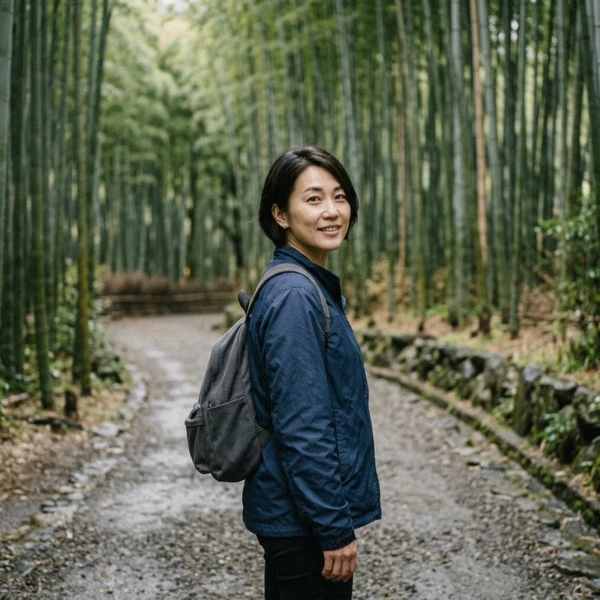
Nonomiya Shrine sits at the southern entrance to the Arashiyama Bamboo Forest, which means most visitors walk past it in the first thirty seconds of their morning without looking left. It is free, it takes ten minutes, and it is older and stranger than the grove it guards: the place where imperial princesses spent a year in purification before leaving for Ise, the setting of one of the saddest scenes in The Tale of Genji, and the home of a stone that is supposed to grant a wish within the year.
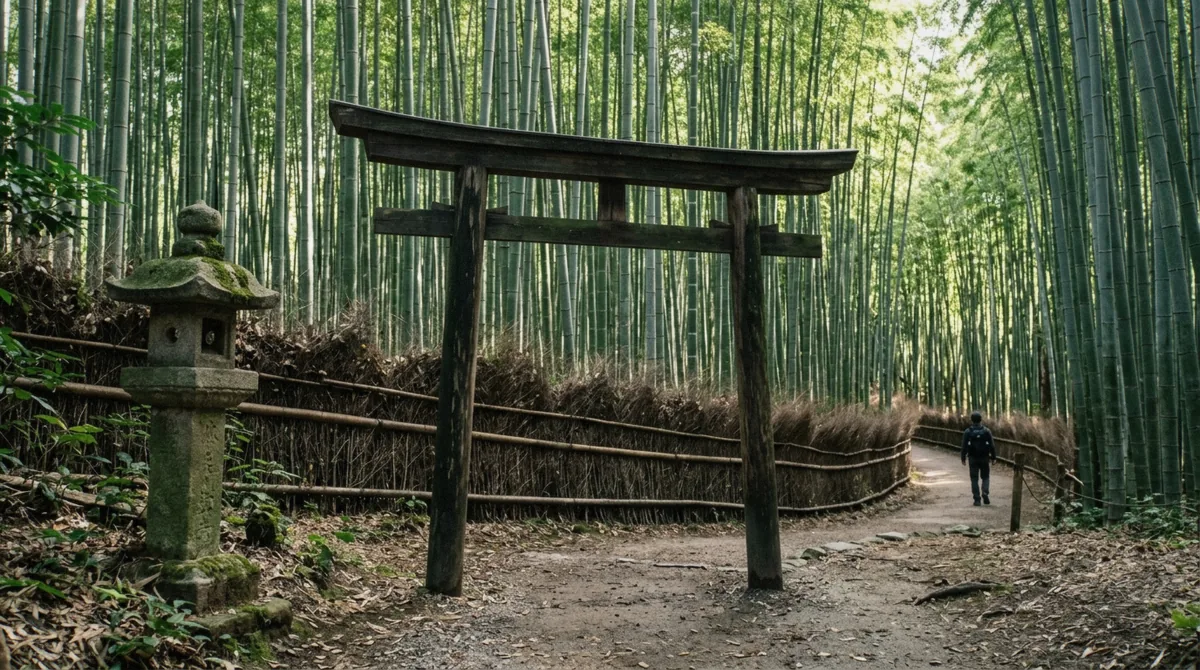
The kuroki torii, made of unbarked timber. Almost every other shrine gate in Japan is vermilion.
Quick answer
Nonomiya Shrine is a free Shinto shrine at the southern entrance to the Arashiyama bamboo path. Its black kuroki torii, made of unbarked timber, is the oldest style of gate in Japan and the reason it looks unlike anywhere else in Kyoto. The shrine was where the Saigu, the imperial princess appointed to serve at Ise, spent a year purifying herself before departing. People pray here for marriage, childbirth and study, and rub the Kame Ishi turtle stone for a wish within a year.
Key takeaways
- Free, no ticket, at the southern entrance to the bamboo path.
- The kuroki torii is unbarked timber, the archaic style, not vermilion lacquer.
- Founded for Princess Ninshi, daughter of Emperor Saga, who served from 809 to 823.
- It appears in the Sacred Tree chapter of The Tale of Genji.
- Rub the Kame Ishi turtle stone beside Daikokuten for a wish within a year.
- Ten to fifteen minutes. It is a stop on the walk, not a destination.
Walks That Stop Here
The shrine is on the route of every walk that enters the grove from the south, and the guides are where the Genji story actually gets told.
 from $64
Most Included — Temple, Matcha & Monkeys
from $64
Most Included — Temple, Matcha & Monkeys Arashiyama Bamboo Grove, Tenryu-ji, Matcha and the Monkey Park
Traveling Tokyo's four-hour loop, and the one that packs the most paid entries into a single ticket: Tenryu-ji, a cup of Uji matcha and the monkey park are…
- Tenryu-ji entry, one Uji matcha drink and monkey park admission all included
- 45 minutes inside the bamboo grove, the longest stop of any tour here
- Nonomiya Shrine and Togetsukyo Bridge on the same loop
- Meets at Tully's Coffee, Randen Arashiyama Station
 from $51
Lowest Price — 4.89★
from $51
Lowest Price — 4.89★ Arashiyama Unveiled — Bamboo Grove, Tenryu-ji, Matcha and Macaques
The cheapest guided version of the classic Arashiyama circuit, and the highest-rated of the four-hour walks. Same spine as the tours above (Tenryu-ji's Zen garden, the bamboo path…
- Cheapest guided walk here that still includes Tenryu-ji and the monkey park
- One matcha drink included
- Small groups that often turn out to be near-private
- Tenryu-ji Zen garden, bamboo path, Nonomiya Shrine, Togetsukyo Bridge
 from $86
Most Booked — 4.86★, 938 Reviews
from $86
Most Booked — 4.86★, 938 Reviews Arashiyama Bamboo, Temple and Okochi-Sanso Walk — with Monkey Park or Sake Brewery
The most-reviewed guided walk on this page, run by Japan Tour Adventure. It is the only one that includes the ¥1,000 Okochi-Sanso Garden ticket, and after the grove…
- Okochi-Sanso Garden entry included: the ¥1,000 villa at the top of the grove
- Tenryu-ji and Iwatayama Monkey Park tickets included (Option A)
- Option B swaps the monkeys for a local lunch and Tanzan Brewery sake tasting
- Group or private booking at different rates
What You Are Looking At
Checked in August 2026.
The shrine is small enough to miss and specific enough to be worth the ten minutes.
| Detail | |
|---|---|
| Cost | Free, no ticket |
| Where | The southern entrance to the bamboo path, past Tenryu-ji |
| Founded for | Princess Ninshi, Saigu from 809 to 823 |
| The gate | Kuroki torii, unbarked timber, the archaic style |
| The fence | Koshibagaki brushwood, the same as along the bamboo path |
| Prayed for | Marriage, childbirth, safe delivery and study |
| Time needed | 10 to 15 minutes |
The gate that is not vermilion
Almost every torii a visitor sees in Japan is lacquered vermilion. This one is black, made of timber with the bark left on, and it is the older form: the kuroki torii is what gates looked like before paint and joinery conventions settled. The brushwood fence around the precinct, koshibagaki, is the same rustic construction used along the bamboo path itself.
Both details are described in The Tale of Genji, which means the shrine has been maintaining a specific look for a thousand years because a novel wrote it down.
A year of purification before Ise
From the early Heian period, the imperial court appointed a Saigu, an unmarried princess who would serve as the emperor's deputy at Ise Jingu, the most important shrine in Japan. Before she went, she spent about a year in seclusion at a purpose-built shrine in Sagano, and this is that shrine.
The site was fixed anew by divination for each new priestess, so the shrine moved around this district over the centuries. It was founded here for Princess Ninshi, a daughter of Emperor Saga, who served from 809 to 823. The Saigu system ended during the fourteenth-century wars between the Northern and Southern Courts, and the shrine survived as a place of imperial ritual and then as a local one.
The Genji scene, and the no play
In the Sacred Tree chapter of Murasaki Shikibu's eleventh-century novel, Lady Rokujo retreats here with her daughter, who has been appointed priestess of Ise. Genji comes to see her one last time, and the two say goodbye by moonlight at this shrine before she leaves the capital for good. The text describes the gates as having a grand and awesome dignity for all their simplicity, which is still an accurate review.
The scene was adapted into a no play called Nonomiya, in which Rokujo's spirit returns to the shrine and tells a priest the story. If you have read Genji, this is the most affecting ten minutes in Arashiyama. If you have not, it is a small shrine with an unusual gate, and that is a fair reading too.
What People Come to Pray For
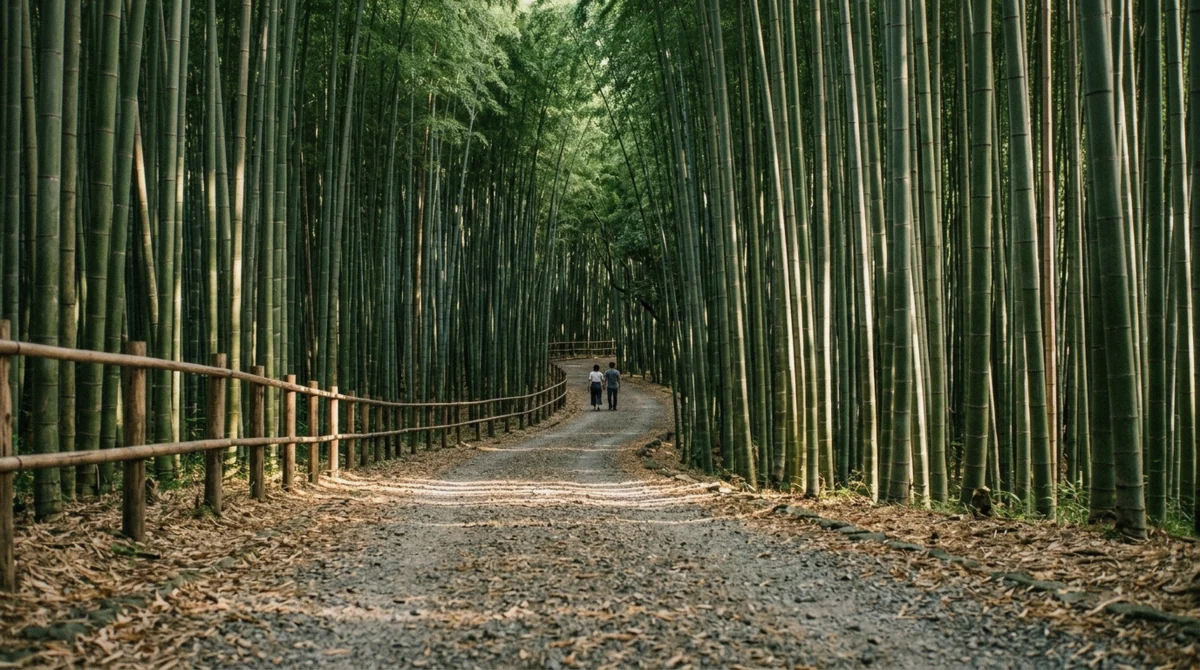
Thirty seconds north of the shrine gate, where everyone else is already walking.
The main hall enshrines deities associated with marriage, childbirth and safe delivery, which is why a steady stream of couples and expectant mothers comes here rather than to a bigger shrine in the city. Study and academic success are the other common petition.
The precinct also holds several sub-shrines: Atago, tied to the mountain north-west of here and to fire and victory; Benzaiten, for luck and the arts; Shirafuku Inari Daimyojin, for business and for blessing couples with children; and an altar to Daikokuten, marked with masks, to the left of the main hall.
- Marriage and matchmaking, the most common reason people stop
- Childbirth and safe delivery
- Study and exam success
- Atago sub-shrine: fire and victory
- Benzaiten: luck and the arts
- Shirafuku Inari Daimyojin: business, and children
The turtle stone
To the left of the Daikokuten altar sits a large, oddly shaped rock called the Kame Ishi, the turtle stone, also read as Kami Ishi, the divine stone. Rub it while praying and your wish is said to be granted within a year.
It is the one thing here that everybody does regardless of belief, and the surface is polished smooth from it.
The moss garden
To the right of the main hall is a small garden carpeted in moss, with a miniature bridge crossing a dip between two low mounds, so that the whole thing reads as a full landscape shrunk down.
It takes up perhaps ten square metres and gets a fraction of the attention the gate does. On a wet morning it is the best photograph on the site.
When to Stop, and How Long
Ten to fifteen minutes covers the gate, the main hall, the sub-shrines, the stone and the moss garden. Because it sits at the southern entrance to the grove, the timing question answers itself: you pass it at whatever hour you walk the bamboo, and before 8:30 you will have it to yourself.
After about 10:00 the shrine takes the overflow of everyone waiting to get onto the bamboo path, and the precinct is small enough that thirty people fill it. Goshuin, the calligraphed shrine seals collectors travel for, are available at the office during the day.
- Best before 8:30, when the grove is quiet and the precinct is empty
- Free at any hour, and the grounds are open rather than gated
- Goshuin seals available at the office in daytime hours
- Pair with Tenryu-ji at 8:30 and Okochi-Sanso at the top of the path
- Ten minutes is enough. Fifteen if you read the Genji panel
Where It Sits
At the bottom of the bamboo path, which is why nobody plans to visit it and almost everybody does.
Questions About the Shrine
What is Nonomiya Shrine known for?
Three things: the black kuroki torii of unbarked timber, which is the archaic form of the gate and unlike the vermilion ones elsewhere; its history as the purification shrine for imperial princesses bound for Ise; and its appearance in The Tale of Genji, where Lady Rokujo says farewell to Genji here by moonlight.
What does Nonomiya Shrine pray for?
Marriage and matchmaking above all, then childbirth and safe delivery, and study or exam success. The sub-shrines cover other ground: Atago for fire and victory, Benzaiten for luck and the arts, Shirafuku Inari Daimyojin for business. The Kame Ishi turtle stone is rubbed for any wish, said to be granted within a year.
Who is the god in the Nonomiya Shrine?
The main hall enshrines the deities of Nonomiya, associated with marriage and childbirth, in a precinct that originally served the purification of the Saigu before she departed for Ise, where Amaterasu is enshrined. Several sub-shrines within the grounds hold Atago, Benzaiten, Inari and Daikokuten.
Is Nonomiya Shrine free?
Yes, like the bamboo path it stands at the entrance to. There is no ticket and no gate charge, and the grounds are open rather than fenced off after hours. Goshuin seals are the only thing you pay for. The full cost breakdown for Arashiyama covers what does charge here.
How long do you need at Nonomiya Shrine?
Ten to fifteen minutes for the gate, the main hall, the sub-shrines, the turtle stone and the moss garden. It works as the first stop of the bamboo walk rather than a separate trip, and before 8:30 you will have the precinct to yourself.
Where exactly is it?
At the southern entrance to the bamboo path in Sagano, a few minutes north of the Tenryu-ji main gate and about fifteen minutes on foot from Randen Arashiyama station. If you are walking up the grove from the shopping street, the shrine is on your right just as the bamboo closes in.
Can you get a goshuin here?
Yes, at the shrine office during daytime hours. It is one of the more sought-after seals in western Kyoto, partly for the Genji connection, so expect a short queue on weekends and in autumn.