 Arashiyama Bamboo Forest
Tenryu-ji: The ¥500 Garden and the Gate Into the Bamboo
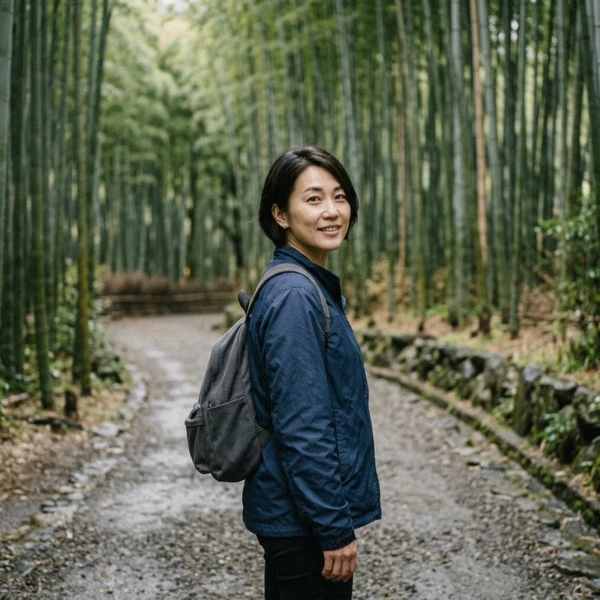
Tenryu-ji is the reason to arrive in Arashiyama at 8:30 rather than 10:00. It is a UNESCO World Heritage site, the head temple of its own branch of Rinzai Zen, and the keeper of a pond garden laid out in the 1340s that has never been redesigned. It is also, for anyone walking to the Arashiyama Bamboo Forest, the smartest entrance in the district: pay ¥500, walk the garden while it is still quiet, and leave through the north gate directly into the grove, halfway along the path and past the crowd forming at the southern end.
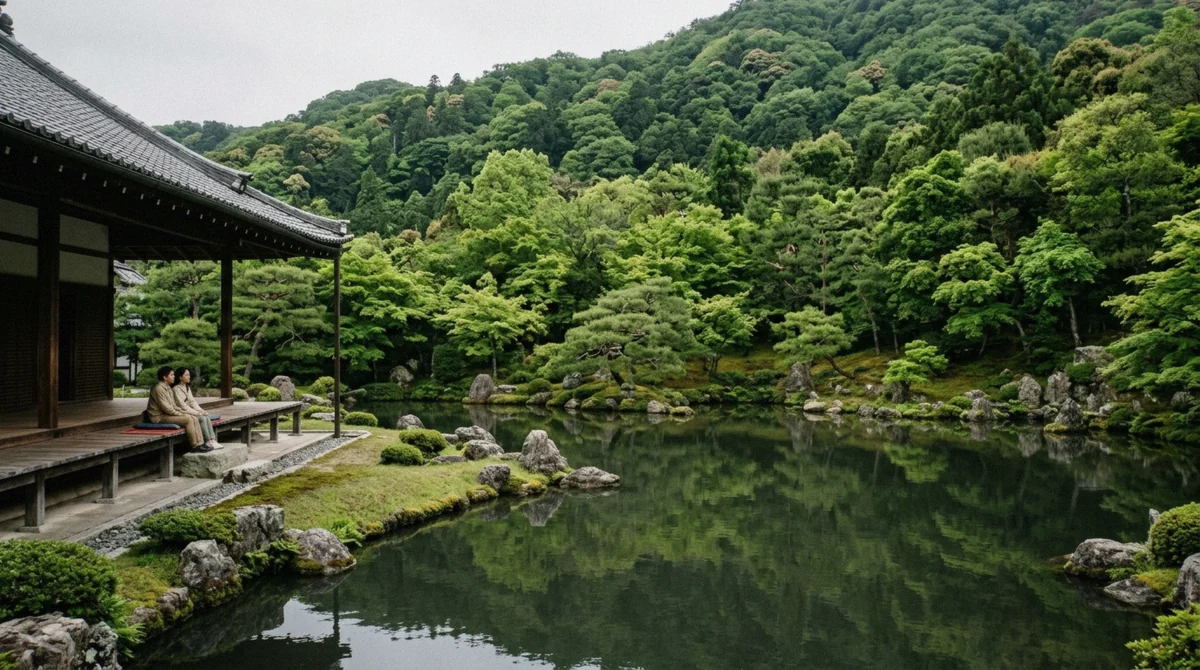
Sogenchi, laid out by Muso Soseki in the 1340s and never redesigned since.
Quick answer
Tenryu-ji charges ¥500 for the Sogenchi garden and ¥300 more to enter the temple buildings, and opens 8:30 to 17:00 with last admission at 16:50. The Cloud Dragon painting in the Dharma Hall is a separate ¥500 and normally opens only at weekends and on public holidays. Allow 45 to 60 minutes for the garden alone. Its north gate opens straight into the bamboo grove, which is why the temple is worth doing first.
Key takeaways
- ¥500 garden, ¥300 more for the buildings, ¥500 again for the Cloud Dragon hall.
- Open 8:30 to 17:00, last admission 16:50, every day of the year.
- Founded in 1339 by Ashikaga Takauji; UNESCO World Heritage since 1994.
- The Sogenchi garden is Muso Soseki's original design, not a reconstruction.
- Leave by the north gate to enter the bamboo path past the bottleneck.
- Four guided walks on this site include the entry, from $51.
Walks That Include Tenryu-ji
Four of the guided walks we track have the temple entry in the price, which also means somebody else deals with the ticket window at 8:30.
 from $86
Most Booked — 4.86★, 938 Reviews
from $86
Most Booked — 4.86★, 938 Reviews Arashiyama Bamboo, Temple and Okochi-Sanso Walk — with Monkey Park or Sake Brewery
The most-reviewed guided walk on this page, run by Japan Tour Adventure. It is the only one that includes the ¥1,000 Okochi-Sanso Garden ticket, and after the grove…
- Okochi-Sanso Garden entry included: the ¥1,000 villa at the top of the grove
- Tenryu-ji and Iwatayama Monkey Park tickets included (Option A)
- Option B swaps the monkeys for a local lunch and Tanzan Brewery sake tasting
- Group or private booking at different rates
 from $64
Most Included — Temple, Matcha & Monkeys
from $64
Most Included — Temple, Matcha & Monkeys Arashiyama Bamboo Grove, Tenryu-ji, Matcha and the Monkey Park
Traveling Tokyo's four-hour loop, and the one that packs the most paid entries into a single ticket: Tenryu-ji, a cup of Uji matcha and the monkey park are…
- Tenryu-ji entry, one Uji matcha drink and monkey park admission all included
- 45 minutes inside the bamboo grove, the longest stop of any tour here
- Nonomiya Shrine and Togetsukyo Bridge on the same loop
- Meets at Tully's Coffee, Randen Arashiyama Station
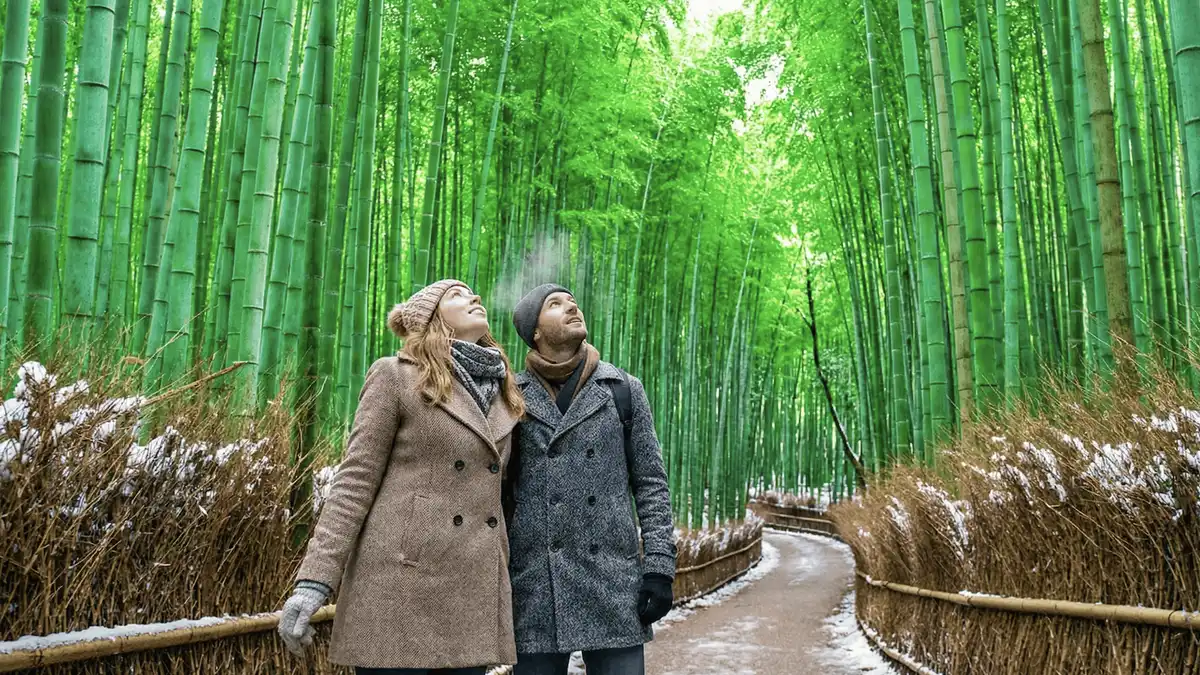 from $51
Lowest Price — 4.89★
from $51
Lowest Price — 4.89★ Arashiyama Unveiled — Bamboo Grove, Tenryu-ji, Matcha and Macaques
The cheapest guided version of the classic Arashiyama circuit, and the highest-rated of the four-hour walks. Same spine as the tours above (Tenryu-ji's Zen garden, the bamboo path…
- Cheapest guided walk here that still includes Tenryu-ji and the monkey park
- One matcha drink included
- Small groups that often turn out to be near-private
- Tenryu-ji Zen garden, bamboo path, Nonomiya Shrine, Togetsukyo Bridge
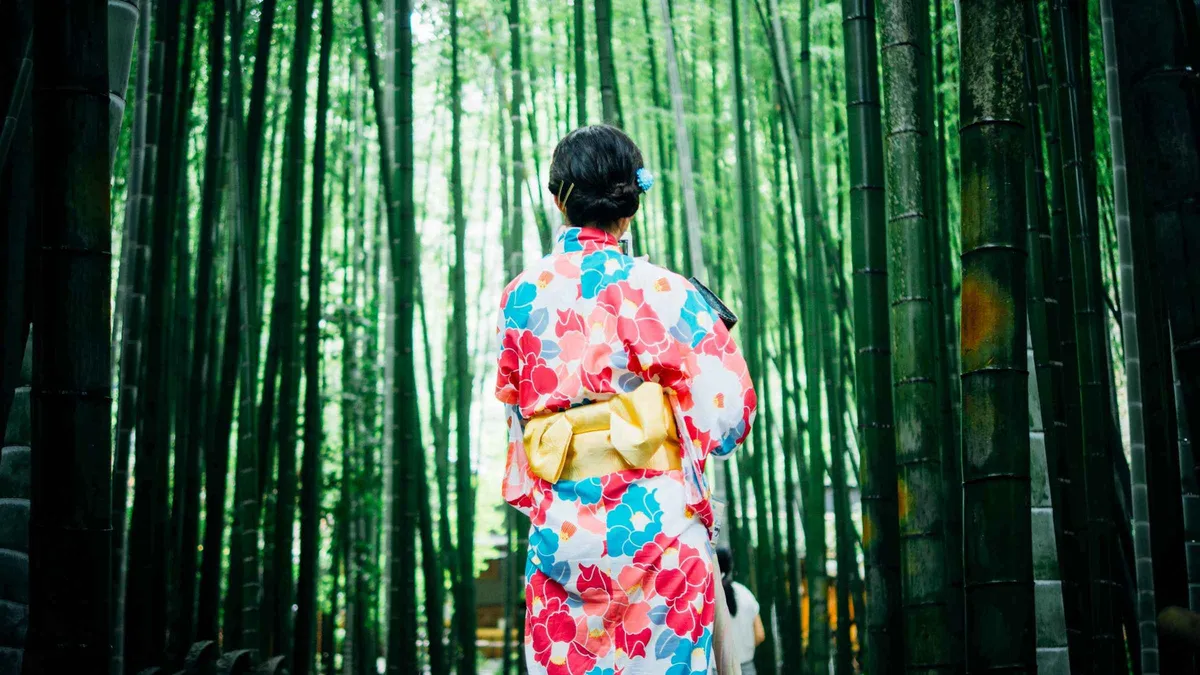 from $57
Earliest Start — Empty Path
from $57
Earliest Start — Empty Path Arashiyama Early Access: Bamboo Path, Tenryu-ji and Togetsukyo Before the Crowds
The shortest and earliest option: two and a half hours built around one idea, standing on the bamboo path while it is still close to empty. It opens…
- Built around the quiet window before the coaches arrive
- Tenryu-ji garden admission included
- 2.5 hours, which leaves the rest of the day free
- Photo coaching at each stop
Fees, Hours and What Each Ticket Buys
Checked against the temple's own information in August 2026. Dollar conversions use ¥157 to the dollar.
Tenryu-ji sells its tickets in layers, which catches people out at the gate. The garden ticket is the one almost everybody wants.
| Ticket | Price | What it gets you |
|---|---|---|
| Sogenchi garden | ¥500 ($3.20) | The pond garden, the grounds and the north gate |
| Temple buildings | ¥300 more | Kuri, Ohojo and the verandas over the garden |
| Cloud Dragon, Hatto | ¥500, separate | The ceiling painting. Weekends and holidays only |
| Opening hours | 8:30 to 17:00 | Last admission 16:50, open all year |
| Shigetsu vegetarian lunch | From about ¥3,300 | Shojin ryori inside the grounds, book ahead |
What Makes It Worth the ¥500
A temple built out of guilt, in 1339
Ashikaga Takauji founded Tenryu-ji in 1339 to placate the spirit of Emperor Go-Daigo, the man he had deposed and who had died that year. He appointed Muso Soseki, the most influential Zen master of the age, as founding abbot, and paid for the work by sending a trading ship to China. The name came from a dream of Takauji's brother, in which a golden dragon rose out of the river just south of the site.
The complex has burned down eight times since, so most of what stands is Meiji-era. What survived every fire is the garden, because gardens do not burn.
The Sogenchi garden
Muso Soseki laid out the pond in the 1340s using the technique of borrowed scenery, setting the water so that the Arashiyama and Kameyama hills behind it read as part of the composition. It is generally called the oldest garden in Japan surviving in its original design, and it is the reason the temple carries its UNESCO listing rather than its buildings.
Go early. Between 8:30 and about 9:00 the water is still and the hillside reflects cleanly; after that the surface picks up ripples and the far side fills with people.
The Cloud Dragon on the ceiling
The Hatto, the Dharma Hall, holds a dragon painted across its ceiling by Kayama Matazo in 1997, commissioned for the 650th anniversary of Muso Soseki's death. It is done in the happo nirami style, which means the dragon appears to look straight at you from every point in the room, and it does, unnervingly.
This costs ¥500 on top of the garden ticket and normally opens only on Saturdays, Sundays and public holidays, with extra dates in spring and autumn. If you visit on a Tuesday, it will be shut, and no amount of asking at the gate changes that.
The North Gate, and How to Use It
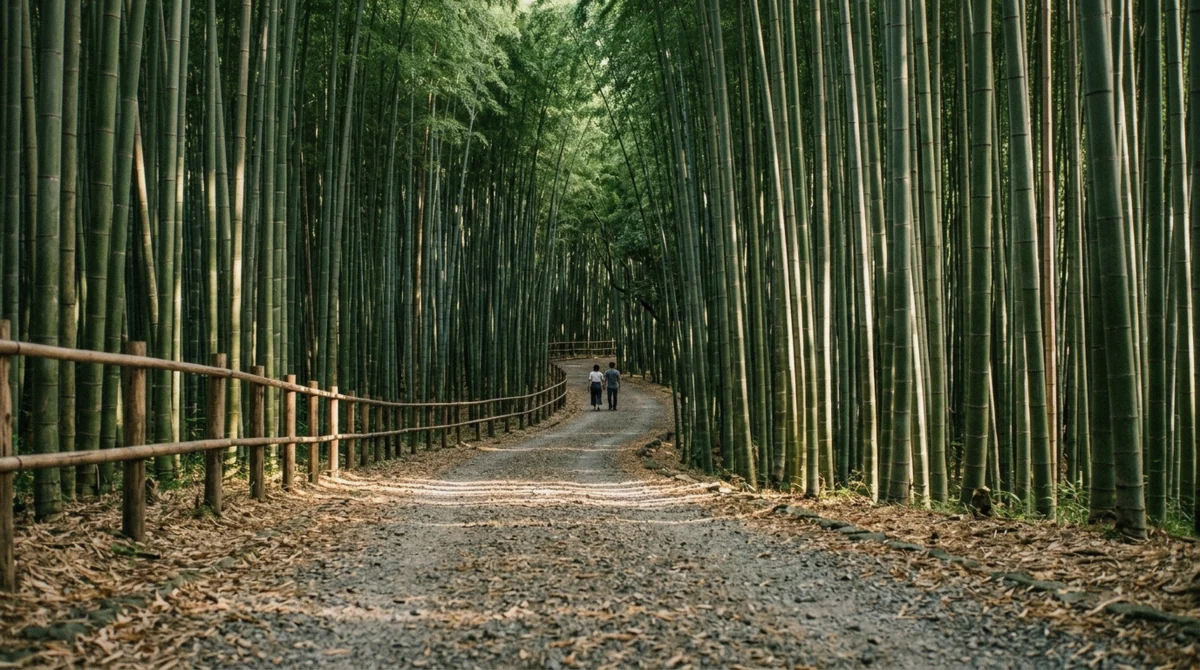
Thirty seconds past the north gate. The southern entrance queue is behind you and below.
The temple grounds back directly onto the Arashiyama Bamboo Forest, and the north gate opens onto the path partway up rather than at the bottom. That is a small piece of geography with a large effect on your morning: the crush forms at the southern entrance near Nonomiya Shrine, and this gate puts you past it.
The sequence that works is simple. Be at the ticket window when it opens at 8:30, walk the garden anticlockwise to keep the pond on your right, exit north, turn left and you are on the bamboo path with the grove still quiet. Total elapsed time from the ticket window to the bamboo: about 35 minutes.
How long to allow
Forty-five minutes to an hour for the garden at a walking pace with photograph stops. Ninety minutes if you add the buildings and sit on the veranda for a while, which is the single most pleasant place to sit in Arashiyama and the part most visitors skip.
If you are eating at Shigetsu, the temple's shojin ryori restaurant, add another ninety minutes and book in advance. It serves Buddhist vegetarian meals in the traditional form, without meat, fish, onion or garlic, and it is a genuinely different lunch from the tofu sets along the main street.
When to Go, and What Else It Sits Next To
The temple's own crowd curve is simpler than the grove's, because it has a gate and an opening time. From 8:30 to 9:15 it is calm. From about 10:00 to 15:00 the garden path is a queue moving at walking pace. Late afternoon thins again but the light goes flat over the pond.
In mid-November the maples inside the grounds turn and the temple becomes one of the most photographed places in Kyoto, which is worth accepting in advance rather than discovering at the gate.
- Best hour: 8:30 to 9:15, straight from the ticket window to the pond
- Autumn colour peaks mid-November, with a queue from opening
- Winter mornings are empty and the borrowed scenery is at its clearest
- The monkey park pairs well after the temple, once the day warms
- The Sagano Romantic Train leaves from beside JR Saga-Arashiyama, ten minutes away
Where It Sits
The temple takes up the block between the main street and the bamboo. Its north gate is the one that matters.
Questions People Ask at the Gate
What's special about Tenryu-ji?
The garden. Muso Soseki laid out the Sogenchi pond in the 1340s and it survives in its original design, which almost nothing else in Kyoto does, using the hills behind as borrowed scenery. The temple carries a UNESCO listing on the strength of it, and its north gate happens to be the best entrance to the bamboo grove.
How much does Tenryu-ji cost?
¥500 for the garden, ¥300 more for the temple buildings, and a separate ¥500 for the Cloud Dragon in the Dharma Hall, which only opens at weekends and on public holidays. Most visitors pay the ¥500 and are satisfied. The full cost breakdown for Arashiyama puts it next to everything else in the district.
Is it worth going inside Tenryu-ji Temple?
The extra ¥300 buys the verandas looking over the pond, and sitting on them is the calmest half hour available in Arashiyama. If you are moving fast, the garden ticket alone covers what people come for. If the day is hot or wet, the buildings are worth every yen.
How much time does it take to visit Tenryu-ji Temple?
Forty-five minutes to an hour for the garden, ninety minutes with the buildings. Add lunch at Shigetsu and you are at three hours. Coming at 8:30 and leaving through the north gate at 9:10 puts you in the bamboo grove before it fills, which is the timing this whole district rewards.
Can you see the Cloud Dragon painting any day?
No. The Hatto normally opens on Saturdays, Sundays and public holidays, with extra periods in spring and autumn, and costs ¥500 separately. Kayama Matazo painted it in 1997 in the happo nirami style, so it appears to look at you from anywhere in the hall.
Does the temple connect to the bamboo forest?
Directly. The north gate opens onto the bamboo path partway along, past the bottleneck at the southern entrance. You cannot enter the temple from the grove without a ticket, but you can leave into it, which is why buying the garden ticket first is the smarter order.
Is Tenryu-ji accessible?
Partly. The main garden path is gravel with some slopes and works for a sturdy pushchair with effort. The buildings require removing shoes and using steps, and the route between the halls is not step-free. The grounds are large, so allow more time than the distances suggest.